
The University of Nebraska is a land-grant institution with campuses and programs on the past, present, and future homelands of the Pawnee, Ponca, Otoe-Missouria, Omaha, Dakota, Lakota, Kaw, Cheyenne, and Arapaho Peoples, as well as those of the relocated Ho-Chunk, Sac and Fox, and Iowa Peoples.
First Floor Galleries
Jennifer Angus: Like a Moth to the Flame
August 7–December 19, 2026
Jennifer Angus creates site-specific, immersive art installations that utilize dead and dried insect specimens to create environments that are often described as otherworldly, magical, and sometimes uncomfortable. Over time, Angus’s work has evolved to consider issues related to the environment and the important role insects play within it.
Like a Moth to the Flame explores the Great Plains region, an ecosystem home to the Sandhill crane migration, American bison, mountain lions, foxes, badgers, and countless other mammals. Less visible, though no less essential, are the nearly 30,000 insect species that inhabit this landscape, most living unseen beneath leaves, within soil, and among grasses. This exhibition invites visitors into that hidden world, asking them to imagine themselves insect-sized, dwarfed by the sculptural works around them. Within this immersive environment, the extraordinary adaptability of insects becomes visible, revealing how these small creatures sustain the intricate balance of an interconnected ecosystem.
Angus is a professor of Design Studies at the University of Wisconsin–Madison. Described by Art Daily as “one of the top contemporary installation artists in the country,” Angus has exhibited widely across the United States, being one of nine artists selected for the landmark exhibition WONDER at the Smithsonian American Art Museum’s Renwick Gallery in 2015.
This exhibition at the Great Plains Art Museum is presented in collaboration with CAREMI—the Community for Arthropod Research, Education, and Materials Innovation—a transdisciplinary initiative at UNL that brings together researchers, engineers, artists, educators, students, and community members to harness the diversity and resilience of arthropods as sources of knowledge, inspiration, and innovation.
This exhibition is supported by the Nebraska Arts Council and the Nebraska Cultural Endowment.
Banner: Jennifer Angus, Eat Me, Drink Me, 2022, insects, pins, bell jars, chandeliers, taxidermy (property of BYU), chinaware, etc. Kimball Art Center, Park City, UT. Image courtesy of the artist.
Above: Jennifer Angus, Like a Moth to the Flame, 2026, insects, pins, chandelier, taxidermy, chinaware, etc.
Video: About the exhibition
Mezzanine Gallery
Moving with the Hydrocommons
August 7-December 19, 2026
A commons is a shared resource that is vital to collective life and the relations such a resource instantiates. The “hydrocommons” extends this idea to water. Moving with the Hydrocommons is an exploration of water and bodies within, around, and beyond the Great Plains. Following the inquiry, “What does water teach?” and drawing from collected vignettes, personal reflections, and contextual research, a screendance was choreographed as an exploration of water across bodies—social, historical, geographic, sensorial. A companion zine was composed to share the contributed narratives, movement and sensory scores, and other watery notations for moving with the hydrocommons.
Moving with the Hydrocommons is Mac Kelsey’s project as the Center for Great Plains Studies’ 2025–26 Student Storyteller in Residence. Kelsey is a teacher, artist, researcher, and PhD candidate in Educational Studies (Teaching, Learning, and Teacher Education) at UNL. She focuses on developing curricula and pedagogies for technology/media studies, cultural theory, and somatic practices in education.
The Student Storyteller in Residence Program is funded by the Michael Farrell Fund for Student Storytelling, administered through the University of Nebraska Foundation.
More about the Student Storyteller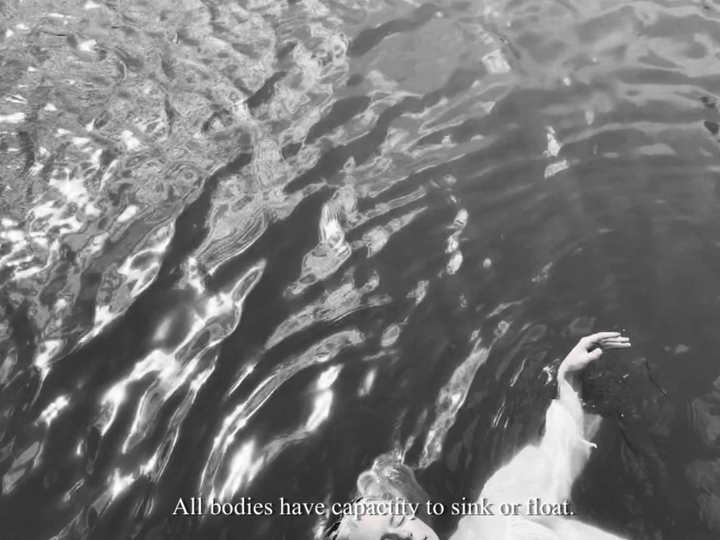
LOWER-LEVEL GALLERY
Elsewhere / The Prairie Was Ours
August 25–December 19, 2026
The prairie is not just a place—it is a presence. A rhizome not just beneath our feet but also within our psyches. Just as native prairie grasses grow from entangled networks underground, the stories here emerge from roots that are collective, dispersed, and resilient. Elsewhere / The Prairie Was Ours invites us to understand Nyi Brathge (Nebraska) not only through geography but through relation. It asks: What lives beneath the visible? What networks of kinship, memory, and survival shape this land—and those shaped by it?
This exhibition brings together the work of three artists—Elizabeth Burden, Willa Ahlschwede, and Marci Sue Black—descendants of formerly enslaved Black American, immigrant European American, and Indigenous communities shaped by prairie life. Their works use image, sound, artifact, and gesture to trace and unsettle memory. They invite us to remember not through monuments of stone, but through echoes in the soil and whispers in the archive.
Marci Sue Black is a member of the Jiwere-Nutachi, or Otoe-Missouria Tribe of Oklahoma, and an Ioway descendant. Raised in her tribal community, Marci Sue brings that perspective to her multidisciplinary art and continues traditional and contemporary Native arts, including regalia making, beadwork, jewelry, leather handbags, belts, and Indigenous fashion design. As an Associate Producer with Deer Woman Productions, she expanded into filmmaking through the Cherokee Film Institute and mentorship from Indigenous colleagues. Her work reflects her roles as an Otoe-Missouria mother, daughter, sister, auntie, and creative.
Willa Ahlschwede is an educator and curator based in Tucson, Ariz., on the unceded homelands of the Tohono O’odham. Raised in Omaha, she is a fifth-generation Nebraskan whose family homesteaded in Saline County in 1872. As the Curator of Academic and Community Engagement at the University of Arizona Museum of Art, she develops exhibitions, learning experiences, and relationships. Her background includes environmental education, arts-based youth and community programs, organic farming, dance, improvisation, collage, drawing, and collaborative mural projects.
Elizabeth Burden is a multidisciplinary artist whose practice of artistic archivy combines studio work and social engagement to explore memory, history, inheritance, and the relationship between past, present, and future. Working across painting, video, sound, coding, mapping, and other media, she creates spaces for critical thinking, feeling, and reflecting. Born and raised in Lincoln, Burden is the great-granddaughter of Henry and Mary Burden, among Nyi Bráthge’s first Black homesteaders. She lives and works in Tucson, Ariz. Burden is the Great Plains Art Museum’s 2026 Elizabeth Rubendall Artist in Residence. Visit the artist during her residency at the museum from Sept. 1 to 12.
Elizabeth Burden, The Ground is More than Just Terrain, 2026, Mixed media: Archival photo (with AI-assisted fabulation) printed on fabric with archival photos printed on vellum, 52 x 87 inches. Courtesy of the artist.

50 Years at the Center for Great Plains Studies

In 2026, the Center for Great Plains Studies and its Great Plains Art Museum celebrate the 50th anniversary of the Center and the 45th anniversary of the museum’s opening. If you value regional study, Great Plains art, and strengthening our collective connection to this place, consider supporting us this year. In celebration of our 50th anniversary, we've set a goal to raise $50,000 to help us continue our work.