Content
The Integrative Research Journal of the Center for Great Plains Studies
Great Plains Research publishes original, peer-reviewed scholarship that brings multiple knowledge systems together to illuminate the peoples, cultures, ecologies, and economies of the Great Plains. By connecting scholars, practitioners, and communities, the journal serves as a platform for understanding and meaningful impact.
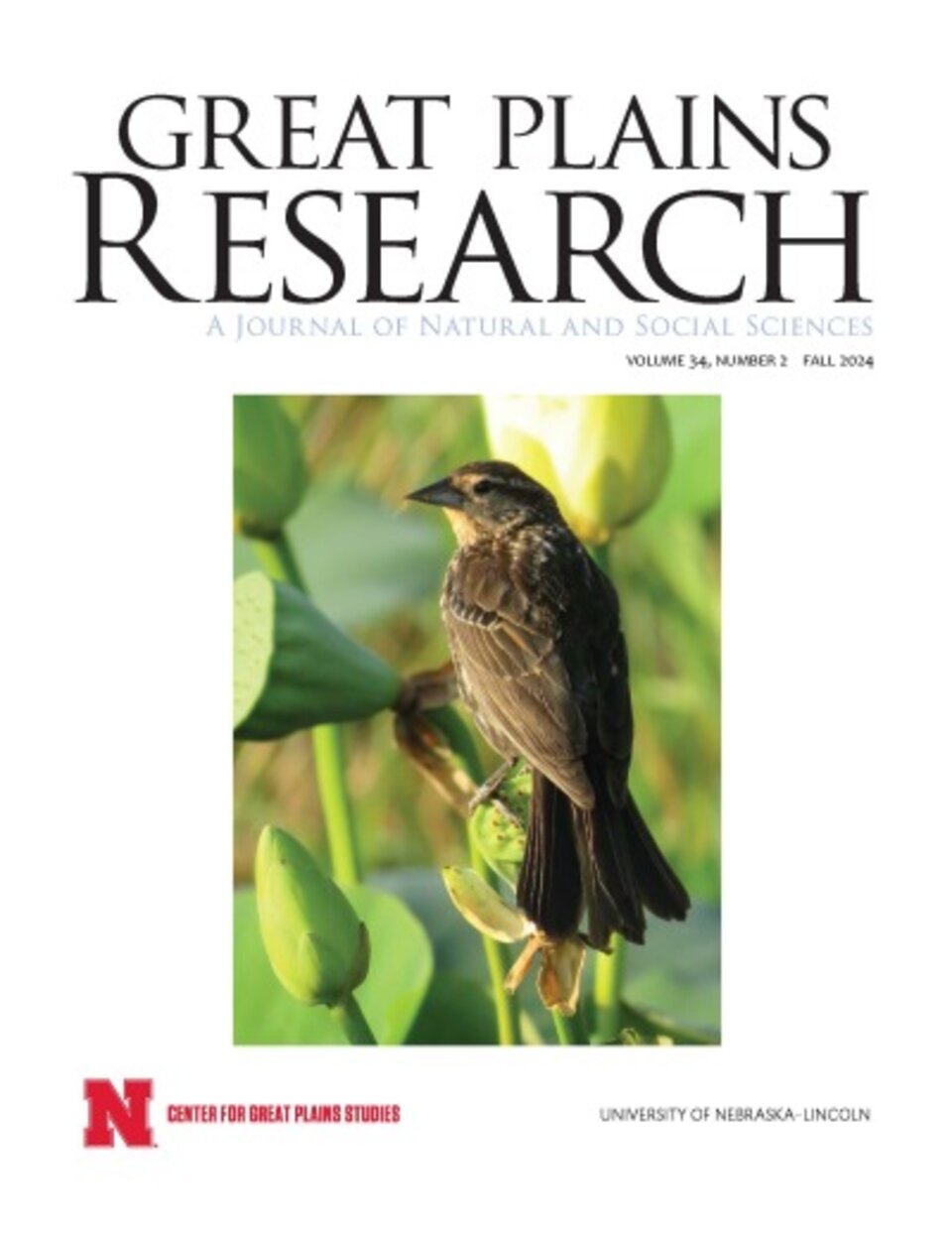
Explore our Archives
Since 1991, Great Plains Research has published scholarship that address the region’s most pressing social, cultural, ecological, and economic issues. Our archives showcase this rich legacy of interdisciplinary research and provide a foundation for the journal’s mission and vision renewed in 2025.
Readers can access past and current issues through Project MUSE, which hosts the full run of the journal. It is also indexed and abstracted in the leading databases, including America: History and Life; BIOSIS Previews; Biological Abstracts; Environment Abstracts; Historical Abstracts; Geographical Abstracts and GEOBASE; Meteorological and Geoastrophysical Abstracts; and CSA Sociological Abstracts.
In addition to its articles, the journal recognizes outstanding contributions to Plains scholarship and provides multiple ways to engage with its content:
Why Publish with Great Plains Research?
Great Plains Research offers a trusted, integrated platform for scholarship that connects multiple knowledge systems to deepen our understanding and appreciation for the Great Plains.
- Interdisciplinary reach: We connect multiple knowledge systems to deepen understanding of the Great Plains.
- Regional relevance: We feature scholarship that creates space to learn from the past, confront the issues shaping our region today, and imagine the futures of the Great Plains.
- Peer review with care and accountability: Submissions receive double-anonymous peer review that emphasizes fairness, inclusivity, and constructive feedback to strengthen contributions. We deeply value the expertise and labor of our peer reviewers. In recognition of our small reviewer pool and our commitment to double-anonymous review integrity, we do not publish a list of contributing reviewers. We encourage all reviewers to recognize their service to GPR on their CV and professional portfolio.
- Engaged readership: We connect scholars, practitioners, and community partners working to preserve and enrich life across the Great Plains.
- Accessible publishing: Great Plains Research does not charge publication or page fees, ensuring that high-quality scholarship remains accessible to all contributors.

Our Commitment to Ethical Publishing
Great Plains Research is committed to a publishing process that is thorough, transparent, and fair to editors, authors, and reviewers. Our Statement of Publishing Ethics details how we honor that commitment.
Get Involved
Great Plains Research is sustained by the people who write for it, review for it, and shape its direction. Whether you are a scholar, practitioner, or community partner, there are several ways to contribute to the journal's work.
Be an AuthorAuthors shape the substance of Great Plains Research. We welcome original scholarship across our submission categories. CURRENTLY OPEN Call for abstracts for the 2027 themed issue "Healing the People, Healing the Land" is open through October 15, 2026. | Be a ReviewerPeer reviewers foster the integrity of Great Plains Research. We ask each reviewer to consider no more than one manuscript per year. OPEN INVITATION We’re building the reviewer pool across all disciplines and career stages whose expertise engages the Great Plains. | Shape the JournalEditorial Board members nurture the community of Great Plains Research by guiding the journal's direction and extending its reach. CURRENT OPENING We’re currently recruiting for the 2027-2029 cycle. The application deadline is Dec. 1, 2026. |
Editorial Team
The editorial team oversees the journal’s mission, vision, publication process, and daily operations. We support contributors, reviewers, and readers in fostering inclusive and regionally grounded scholarship.
- Editor: Asa B. Stone
- Book Review Editor: Rebecca Buller
- Editorial Assistant: Melissa Amateis
- Copy Editor: Lona Dearmont
Editorial Board Members (2025-2027)
We are pleased to welcome a new cohort of editorial board members as Great Plains Research enters an exciting new chapter. This renewed board coincides with the journal’s reconceptualization, reflecting our commitment to inclusive, interdisciplinary, and regionally grounded scholarship.
- mary v bordeaux (Sicangu Oglala Lakota), Racing Magpie & Black Hills State University
- Maurice Godfrey, University of Nebraska Medical Center
- Margaret Jacobs, Director, Center for Great Plains Studies
- Edmund 'Ted' Hamann, University of Nebraska–Lincoln
- Peter J. Longo, University of Nebraska at Kearney
- Liz VanWormer, University of Nebraska–Lincoln
Connect with us
For inquiries, please contact us at: gpr@unl.edu
Accessing GPR via Project Muse
On-Campus Instructions
If you’re on a University of Nebraska campus (with the exception of UNMC) and connected to the Internet network, you’ll automatically be recognized as being part of the Project MUSE network, and you’ll be able to view the journals with no additional steps. Simply visit Project MUSE’s website at http://muse.jhu.edu/, then search for Great Plains Research.
Instructions for Off-Campus UNL/UNK/UNO Access
Visit Project Muse's login page and search for your institution. Input your university username and password.
You can also access the journals through UNL Libraries.
Institutional access outside the NU system
Two ways to access it:
1) Log on to your university’s website and search for a link for electronic journals. Follow your university’s guidelines for on-campus and off-campus access. These instructions should be available on your library’s home page. Once you are on the search page, type in “Great Plains Research” and the cover of the journal should appear.
2) You can also log on to Project MUSE at http://muse.jhu.edu/ and see if your university/college is registered as a Shibboleth authentication participant. If so, on the very top of the screen, you will see a phrase that says, “Unable to determine location” or something similar. Click on “Change” and you will see a box that says “Shibboleth.” Type in a few letters of your university’s name and a list will appear. If your institution is on this list, you will be able to log in to Project MUSE using your university credentials.