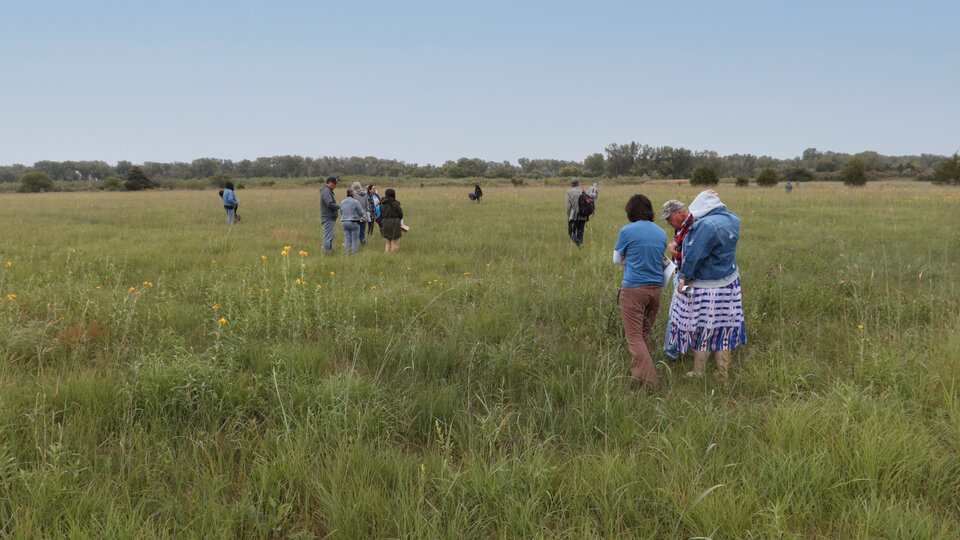
"On Otoe-Missouria ancestral homelands in Lincoln and southeast Nebraska, our old people walked, loved, and kept the land’s spirit. Reuniting with these places has been a deep, healing journey for our people, bringing warmth, remembrance, and renewal."
— Cory DeRoin, co-founder of the Walking in the Footsteps project
"I felt a tie and connection to the land that was once just a part of a history to me. The people there have been so welcoming and full of love and knowledge. It’s helped make the lands feel like home even more so.”
— Marci Black
"Reconnection to ancestral land is a return to places where our ancestors not only lived, but walked, prayed, planted food, harvested medicine, raised families, conducted ceremony, danced, and ultimately died. To reconnect with those places and spaces is a deeply personal and spiritual experience."
— Christina Faw Faw Goodson
Leaving a Legacy, Healing from the Past
The Walking in the Footsteps project wants to foster healing and reconciliation by helping the Otoe-Missouria people regain a permanent presence in southeast Nebraska where they can practice their ceremonies, speak their language, grow and gather traditional foods and medicines, and engage with the public.
Contact us with the form on this page or email/call 402-472-0602 and request a meeting with Margaret Jacobs, Walking in the Footsteps of Our Ancestors co-director (mjacobs3@unl.edu).
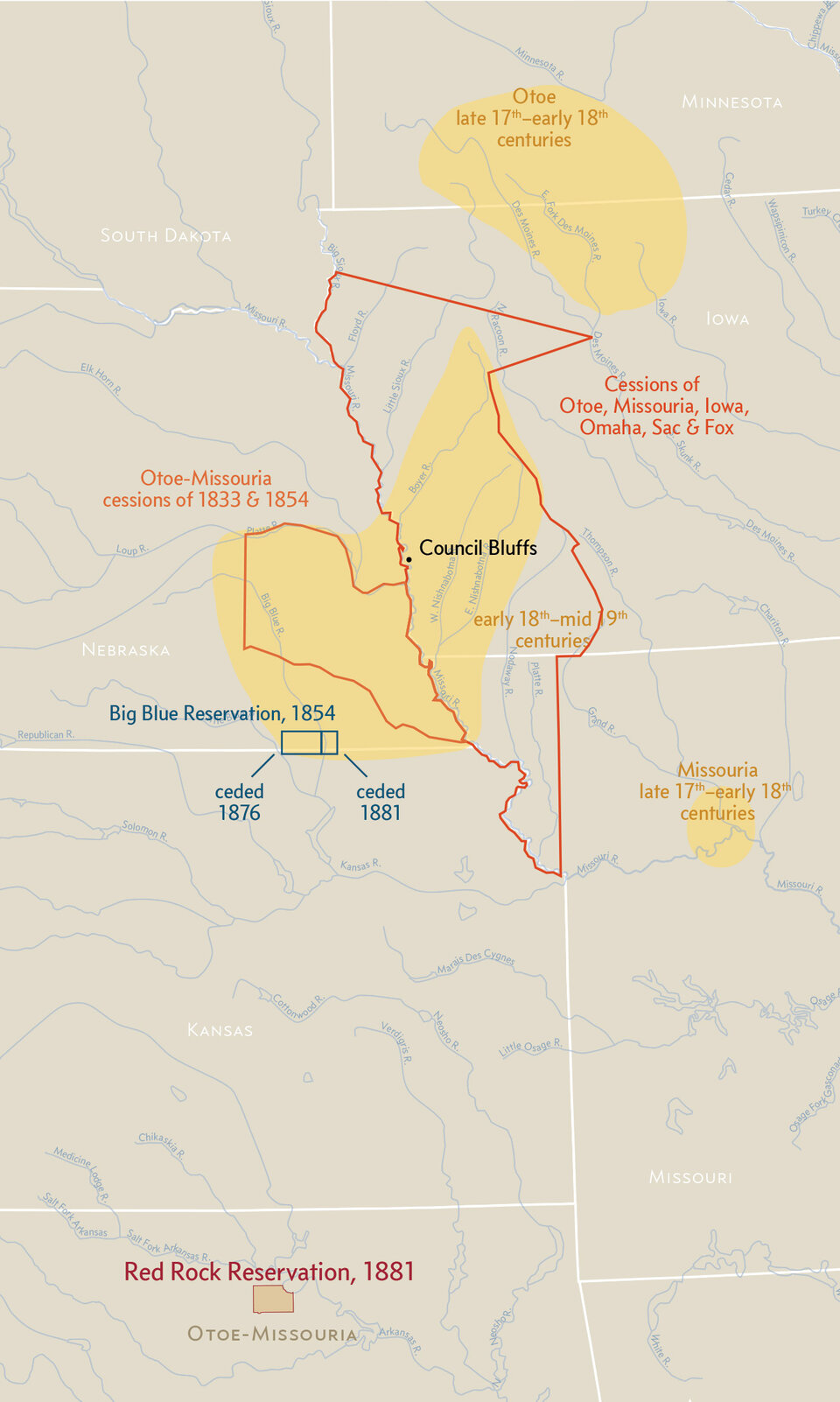
Throughout the 19th century, in a series of treaties, the U.S. government pressured the Otoe-Missouria, along with all tribal nations, to relinquish their land. In 1854, the tribe ceded its remaining 3,125 square miles west of the Missouri River to the U.S. government and moved to a reservation on the Big Blue River. The government broke its treaty promises, and by 1881, had sold off all of the reservation lands to non-Indians. The tribe was relocated to Indian Territory, where it is based today in Red Rock, Oklahoma.
Walking in the Footsteps of Our Ancestors work
The Otoe-Missouria Tribe and the Center for Great Plains Studies at the University of Nebraska began working together in 2022. Since then we have carried out many activities in and near Lincoln, Nebraska:
- We have celebrated Otoe-Missouria Day on Sept. 21 every year.
- In honor of esteemed Otoe-Missouria gardeners, we initiated the Sarah Grace Hudson and George Kihega garden at Prairie Pines Naure Preserve to cultivate traditional Indigenous crops and medicines.
- We held an all Otoe-Missouria art exhibition at the Great Plains Art Museum.
- We initiated the Talking in the Footsteps of our Ancestors podcast and have launched a documentary film project.
- We conducted an audit of existing historical monuments in southeast Nebraska.
- We established an agreement with the City to use part of a new park for an Otoe-Missouria ceremonial ground.
- We have created cultural easements with land conservation groups to enable the Otoe-Missouria to use their prairies for cultural purposes.
You can contribute to healing the land and its peoples by helping the Otoe-Missouria people return to their ancestral lands.
You can leave a legacy of reconciliation by giving back, sharing, or selling your land for a fair price.
You can make the Otoe-Missouria’s vision a reality and help care for and share the land for generations to come.
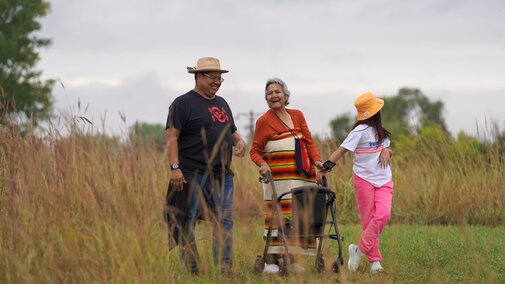
How to help:
If you have land and would like to see it put to a positive purpose, please consider working with us to return the land to its original owners, the Otoe-Missouria people.
Giving back:
Land donation, life estates, and estate gifts
You can transfer full ownership to the tribe, arrange a life estate that allows you to continue to live on the property during your lifetime, or set up an estate gift that transfers title to your land after your death.
Sharing:
Cultural easements, land access agreements, and leases
You can create an agreement to allow tribal members access to your land, set up an easement that gives tribal members permanent right to land for conservation and/or cultural purposes, or lease the land to the tribe for their exclusive use.
Selling:
Simple sale or transfer and retained relationship
You can transfer full ownership by initiating a simple sale at a cost equal to or lower than fair market value. You can also arrange to retain a relationship to the land you have sold, such as a lease or land access agreement.
Other options:
These include purchase rights that allow the tribe the right to purchase your land sometime in the future.
Many other people have returned land to tribes
Nebraska humorist Roger Welsch returned 60 acres of land to the Pawnee people in Dannebrog, Nebraska, as a place to rebury their ancestors.
“It’s been the best thing I’ve ever done in my life. And I’ve come to the point where I really believe that’s why I’m on this Earth.”
—Roger Welsch
Farmers Art and Helen Tanderup returned 10 acres of their farm in Neligh, Nebraska, to the Ponca people to grow their sacred corn.
“When Helen and I are gone, we can’t take this land with us. . . . our children, and grandchildren, hopefully will be here for generations. But part of that is going to belong to the Ponca Nation. I know that’s going to be well taken care of.”
—Art Tanderup
T.R. and Kay Hughes donated land to the Northern Cheyenne Tribe near Fort Robinson State Park in northwest Nebraska so the tribe could build the Northern Cheyenne Healing Trail, a monument to the 64 Northern Cheyenne who were killed while attempting to return to their homelands in the Northern Cheyenne Breakout of 1879.
“It never belonged to us in the first place.”
—T.R. Hughes